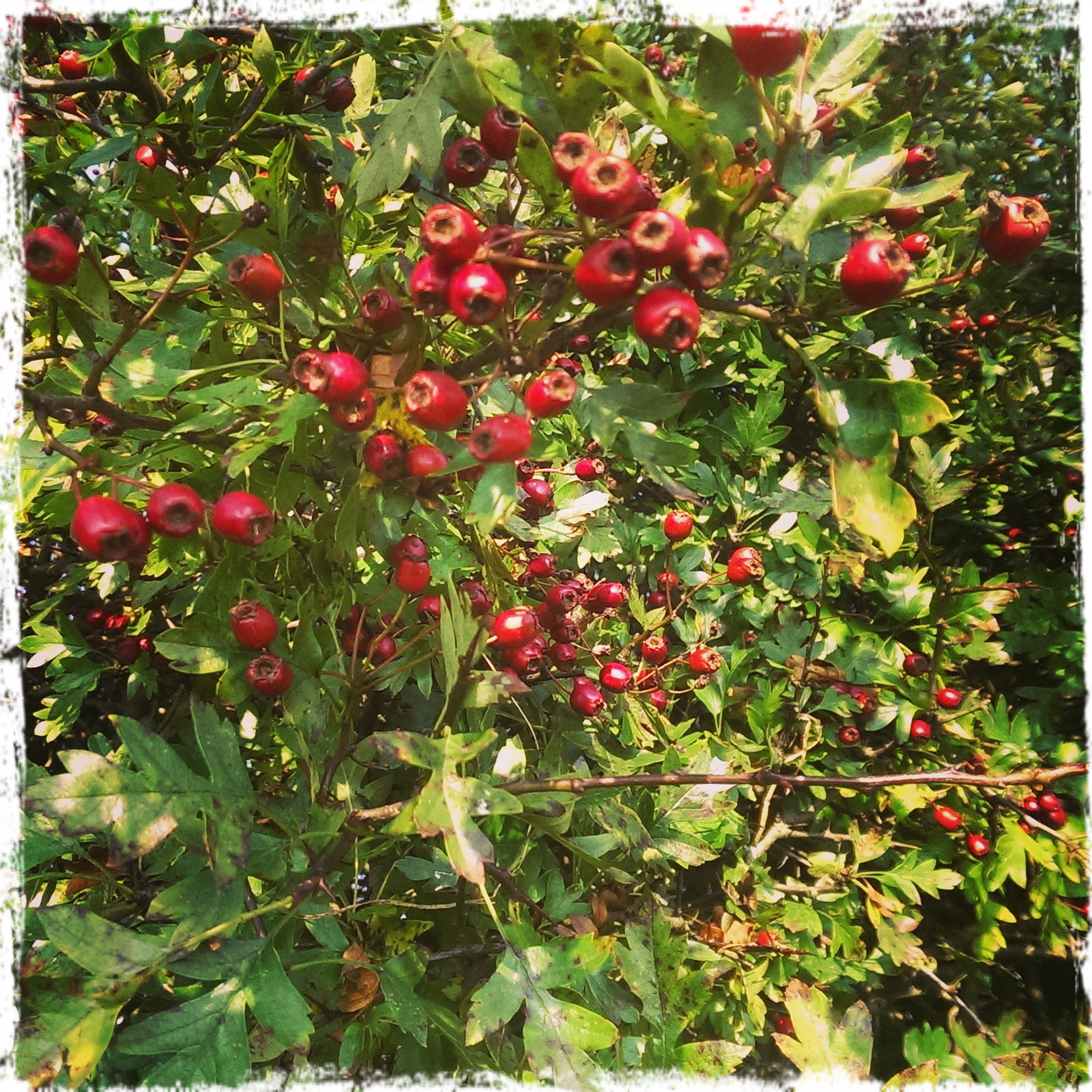
Today I was out on the farm and noticed how the hawthorn hedges are heaving with haws (hawthorn berries). A bit of research revealed that, according to Irish folklore, the hawthorn is thought to have powerful healing properties.
An infusion of the leaves, flowers or berries is thought capable of relieving anxiety and heart-break (of both a physical and emotional nature!). Some people suggest that it’s an effective “heart tonic”, giving relief to those who suffer from angina. Oh, and if berries are used for such an infusion, it is recommended that you wait until after the first frost which sweetens them.
So, today’s haiku is all about the hawthorn berry, and I’ve tried to reflect some if its medicinal qualities! You can read my haiku here, and I read it out loud on today’s video-blog too.
This morning’s walk with my dog was spectacular! Even though the sky was darkened by a flat grey ghost-mist, the hedges, railings, plants and fences were glinting with dew-laden spider webs. It was as though the spiders were putting on a spectacular show at the edges of morning consciousness.
Before writing today’s haiku, I did a little research about spider webs. As a result of my research I learned where the term “cobweb” comes from. It turns out that coppe is the Old English word for spider 🙂 .
Yesterday’s attempted viewing of the Harvest Supermoon has inspired today’s haiku poem!
The haiku-writing process is orienting my attention towards nature, and it’s making me curious about it too. As I was looking up at the moon, the question arose “How does the moon shine like that?” So, today I got on the case and was as thrilled as a constant-why-asking 3-year old to discover the answer (which sounds familiar in a very hazy way .. like I may have actually been 3 when I asked my parents this very question!)
So, I hate the break the news to you : the moon does not shine. What we’re actually seeing is the reflected light from the sun bouncing off the moon. In other words, the moon is a mirror.
Oh, and when the moon is full, and especially when it’s a supermoon, its “shine” is bright enough to obscure other objects in the night sky. If you wondered where all the stars were on Monday night, they were still there, but they were being outshone by the moon.
Anyway, less about heavenly bodies and more about heavenly haikus 🙂 . Today’s haiku is called “Supermoon” and you can read it here. I also read the haiku out loud in today’s video-blog.
At 02.38 this morning, 2014’s Harvest Moon reached the crest of its full phase. This was a special Harvest Moon because it was also a supermoon (a perigean full moon).
The Harvest Moon is the full moon that falls closest to the autumnal equinox (Monday 22nd September in 2014). A full moon is a supermoon when it turns full less than a day after reaching lunar perigee. Lunar perigee is when the moon is closest to the Earth during its monthly orbit, and it appears larger and brighter at this time because of its proximity to us.
I’ve never observed a Harvest Supermoon at the crest of its full phase, so I decided to get up just before 2.38 this morning in the hope of seeing it. Because I’d done a bit of research beforehand, and would understand what I was witnessing, it all felt very exciting!
Of course, seeing it would be dependent on weather conditions …..
The Mushroom Muse has been rather impatient today ; she’s been weaving word-tendrils in my head all morning, sending soporific spores to my “regular work” brain and tempting me to the the writer’s desk. She’s good : she got her way.
My mushroom-hunting adventure has left me with a residual fascination for fungus (let’s face it, it could have been worse 😛 ). And, in my attempt to learn more about each of the mushrooms I spotted, it surprised me to discover that whilst some of them make for good eating, these very same mushrooms can eat the life out of other living things!
Today I’ve written a haiku poem about the Honey Fungus mushroom, Armillaria Mellea. According to my research, it is edible (after cooking), but it’s also a MERCILESS KILLER of trees. Those delicate wee honey-yellow caps sit on top of a huge weapon of mass destruction that lies just below the surface : clusters of rhizomorphs that look like boot-laces. (In fact, this mushroom is also sometimes called the Bootlace Fungus). The fungus spreads via these rhizomorphs and attacks trees, shrubs and woody climbers. Once it’s taken hold, sheets of white fungus material (mycelium) appear between bark and wood, and quite a bit of suffering ensues (in some cases, the bark even “bleeds”).
The root-like rhizomorphs can advance at the rate of up to 1 metre a year. The Armillaria organisms are thought to be amongst the largest on Earth – there is one such single organism that is reported to be 3.4 square miles in size.
Yesterday’s mushroom-hunting adventure was so exciting that I leapt out of bed this morning, keen to get to work on a fungus-based haiku. Only it seems that my imagination had other plans :P.
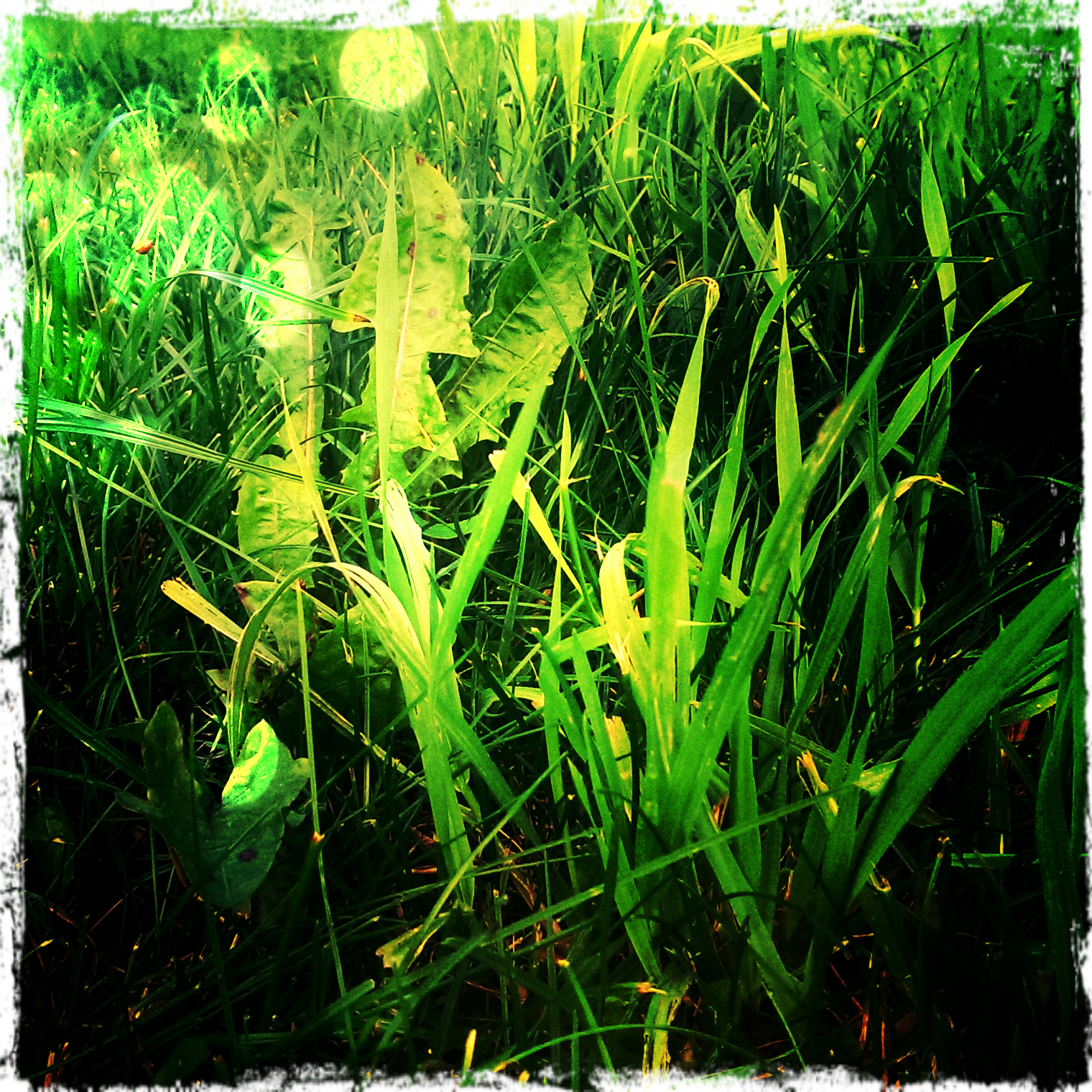
Returning from my early morning walk with my dog, I went into the kitchen and opened the blind to let in the light. The window looks out onto a patch of grass. The grass caught my eye : that patch of green stuff really looks like it’s doing exactly what it wants to, in spite of any gardener’s urges to control it or keep it in any kind of order.
I stood still, just gazing at the grass for a while, when a haiku just appeared (that’s exactly how I experienced it, like a flash of inspiration!)
My research into haiku revealed that the traditional form was not only an attempt to capture the essence of something in the natural world, but was also a skillful way of drawing attention to an aspect of the human condition. In today’s haiku about grass, the words ring as true for grass as they do for any of us who have experienced the messier side of human relationships.
It seems that this whole process of writing haiku poems is not only connecting me to nature, it’s also connecting me to my own nature. I’m beginning to see myself in nature. I’m beginning to really feel part of it. And because I’m beginning to feel part of it in such a real and alive way, it’s changing the way I feel about it. I’m in awe of it. I respect it. I think it’s clever, brilliant and beautiful. I think we should protect it, nurture it and nourish it. We should be in it more. I think it’s real. I think it could teach us a lot. I think it will help us to remember what we’ve forgotten.
You can read “Grass” here ; I also read my haiku out loud in today’s video-blog.
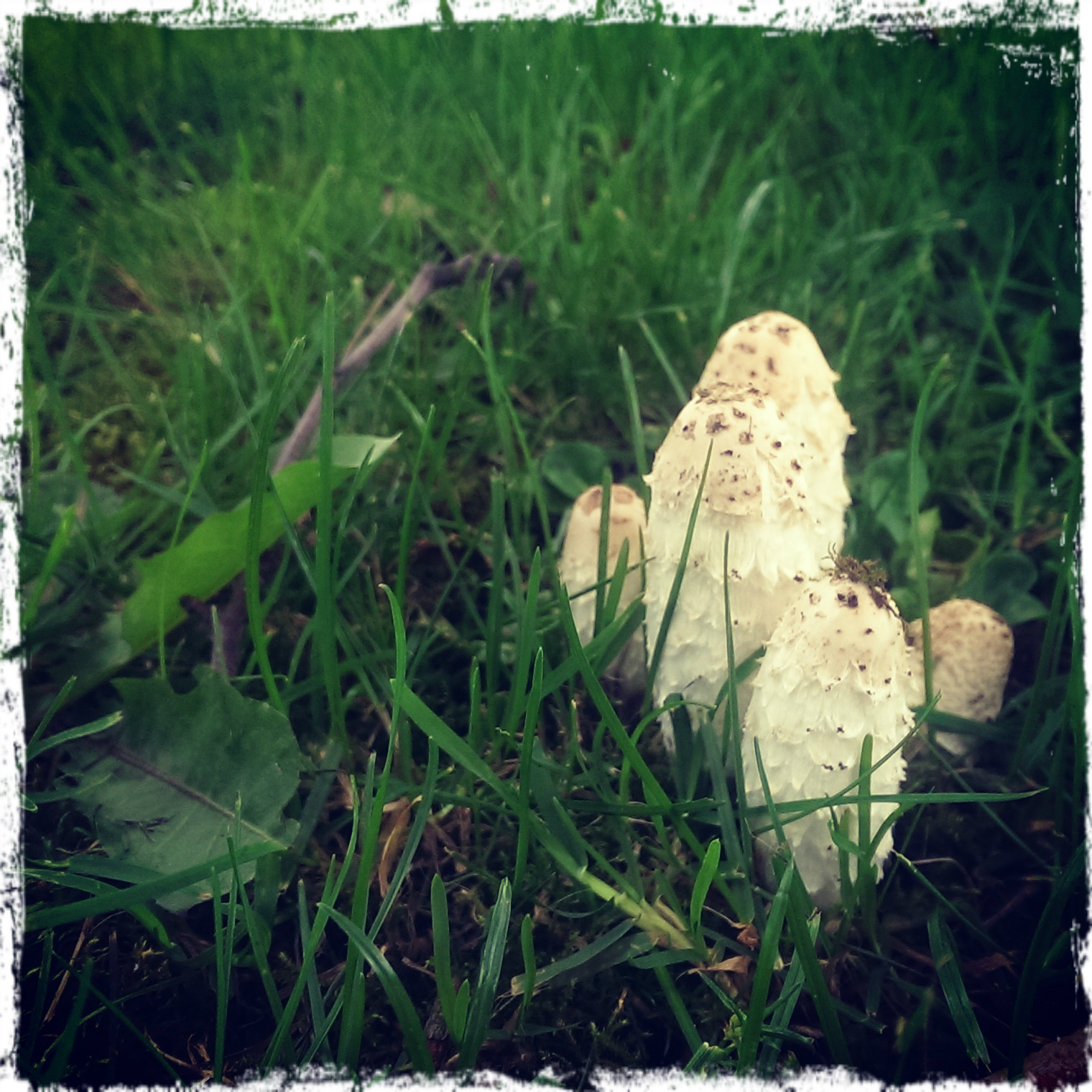
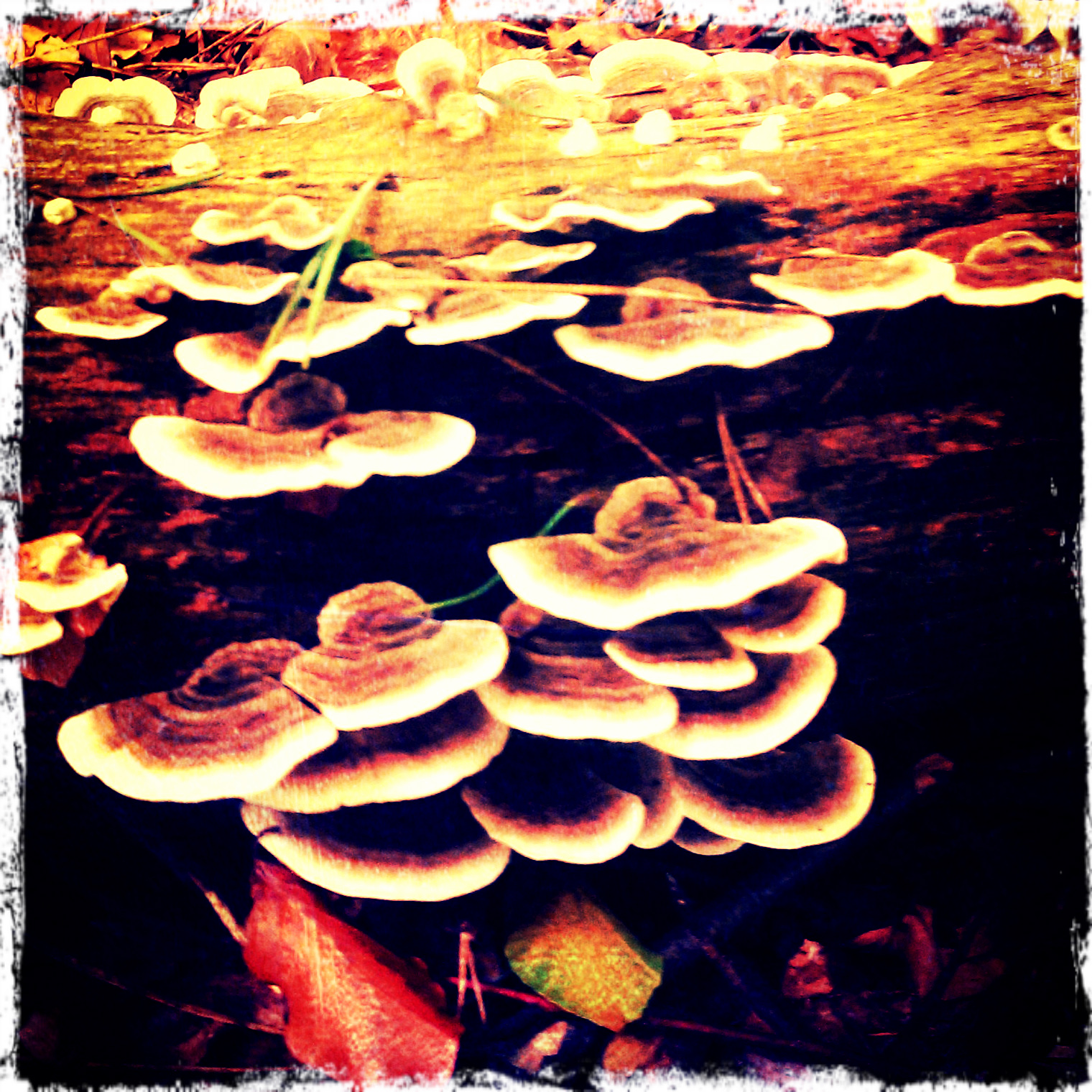
Portglenone Forest was the setting for a fabulous impromptu adventure today! The forest was leaping with mushrooms large and small, and a walk that usually takes 30 minutes to complete with the dog, took almost an hour and a half today. It was really exciting to hunt for different types of fungi, even though I didn’t have a name for anything I saw.
I took pictures of all the different types I spotted. When I got home, I used the Wild Food UK website to help with identification. It was so much fun comparing my pictures with the images on the website and learning more about each one of them.
Here’s what I came up with! If you click on the name of each one, you’ll be able to see why I came to the conclusion I did. Do you think I identified them correctly? I’m not sure about the last one ~ I think it’s a type of bracket fungus though! (Do let me know if you know what it is 🙂 ).
One of the biggest shifts I’m experiencing as a result of writing my collection of haiku poetry is in the nature of my attention. At the beginning of this adventure series, I was waiting for something from the outside, something from nature, to grab my attention ~ and then I’d write a haiku about that. But now it’s beginning to change, and I really noticed it today. Today, my attention was geared towards the outside world, like a highly sensitive radar. I’m not waiting to have my attention grabbed : I am actively attending to the natural world.
Today, it felt like my senses couldn’t get enough of what was going on around me. As I drove my son to school, I began noticing the differences in the trees : some are yielding to Autumn far more quickly than others. It’s even possible to notice the very gradual swallowing up of a tree by the new season, day by day.
On the way back from school, I stopped to admire a rowan tree (also known as mountain ash). These trees are in full berry now. As the other trees begin to fade, this tree is coming into its prime.
A little bit of treelore research revealed some fascinating facts about the rowan. The rowan (derived from the the Scottish Gaelic word rudha-an, meaning “the red one”) is considered to be a sacred tree and is associated with the Celtic goddess Brighid (patroness of the the arts, smithing, healing, weaving and spinning).
In Scotland and Ireland, spinning wheels and spindles are traditionally made out of rowan wood. Discovering this made me smile : here I am, writing a collection of poetry about the turn of the season, and I’m being gifted the experience of a tree which is associated with spinning!
Whilst the rowan can grow anywhere, it is often found in mountainous areas. For this reason is sometimes called “The Lady Of The Mountain.”
Bearing all this in mind, and acknowledging my direct experience with the local tree this morning, I’ve written a haiku that attempts to capture the full essence of this majestic tree.
You can read today’s haiku here , and I read it out loud in today’s video-blog.
In yesterday’s video-blog, I shared with you how my collection of poetry is an attempt to capture the change of the season. Today, I’ve taken a few more steps towards actually publishing the collection!
I’ve come up with a name for the anthology which I really like : Seventeen. I called it this because a haiku has seventeen syllables in it (5-7-5). The image for the cover is a photograph I took for one of my haiku poems : it’s wheat “on the turn”. It captures the essence of the whole collection.
In terms of the structure of the book, I’ve decided to put each poem on a separate page with an accompanying photograph. For me, a haiku and a photograph are almost identical : each tries to capture the essence of something. So, a photograph is like a visual haiku 🙂 .
On the page facing the haiku, I’ll write a little bit about the story behind that particular haiku.
Because I’ve gained so much from creating this collection (and I’ve still got a few more to write before the collection is done) , I’m going to include a section on the therapeutic benefits of writing haiku poems. The haiku adventures are conditioning a profound sense of connection and presence in me; I feel like the world is slowing down.
I’m also going to include a section on how to write haiku poems. Whilst I’ll include some very basic structural guidelines, my purpose here is rather to show people how to get connected to the essence of the thing they’re trying to describe.
And after all that, I’m going to have a go at the adventure of self-publishing :). I’ll keep you posted.
For me, the things that really mark the changing of the season are the end of the summer holidays and the beginning of the school term. The first full day of school for my son was this monday and seeing him in his uniform again reminded me :
How quickly we, as humans, move through our own seasons
How tied I really am to my own heritage (I come from a family of school teachers)
How I can already see in my son’s Spring, the seeds of his Autumn (I think the leaves will be spectacular)
For today’s poetic adventure, I’ve written a haiku called “Back to school”. You can read it here , and I read it out loud in today’s video-blog too.
 Today I was out on the farm and noticed how the hawthorn hedges are heaving with haws (hawthorn berries). A bit of research revealed that, according to Irish folklore, the hawthorn is thought to have powerful healing properties.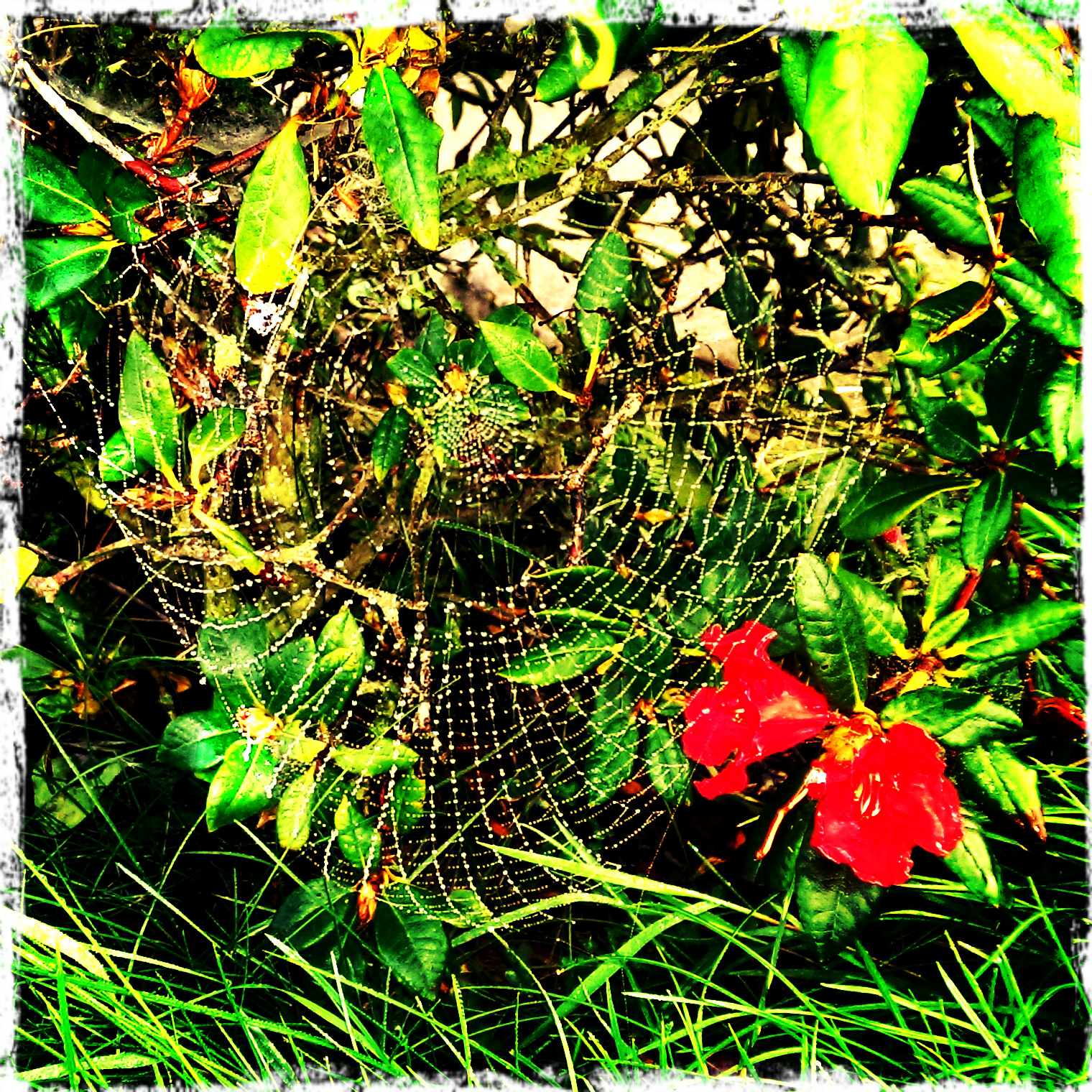







 Humans Resourced