July 20 was a big day for me: I took part in my very first powerlifting competition – the NIPF rookie comp in Coleraine. On that day I met three inspiring women and I’ve recently managed to catch up with them and interview them for my adventure blog 🙂 . Kyla Mulholland and Clare Conway are both seasoned competitors. Kyla did the weigh-ins, MC’d and refereed at the rookie comp. Clare was a guest lifter and also refereed. Both of them were extremely welcoming and supportive (and I have to extend a special thanks to Kyla who managed to stop me from storming the platform early FOR EVERY SINGLE LIFT 🤣). Una Ferguson was the second oldest lifter (I was the oldest) in the competition and I felt a special connection to her as a fellow M2 competitor.
It’s a bit of a bumper edition but really worth the read. If these women inspire you to find out a bit more about powerlifting in Northern Ireland, hop over the the NIPF website or check out the NIPF Facebook page! You’ll find the home of British Powerlifting here and the Irish Powerlifting Federation website here.
 Kyla Mulholland
Kyla is 45, married and a mum of two. She owns two after-school clubs in the Greenisland area, as well as being a national referee for NIPF (Northern Ireland Powerlifting Federation) and GB. Based in Carrickfergus, she’s a member of the NIR powerlifting team. She competes in the M1 84+ category (so that means masters category 1, which is for the 40 – 49 age range, and 84 kilos bodyweight and over).
Kyla currently holds all the NI records in her category and for Irish M1, open bench and total. Her current records stand at:
Squat 150kg
Bench 100kg
Deadlift 162.5kg.
Equipped bench press 125kg
1. How long have you been powerlifting and how did you get into the sport? Approximately 6 years now. I started weight training with a coach, and we both realised I was reasonably strong so sourced out the NIPF. At the time when I first competed there were only around 10-12 woman in the whole federation.
 2. Tell me a little bit about your training regime. I have been with my coach Marty Cummings at ReForm for nearly 3 years now. I train Monday to Friday mornings. My programme runs on a 12-week cycle. I bench and squat every training session and deadlift 2 days with accessories* thrown in. I find during the months of July and August training becomes impossible with work commitments as I work from 7am to 8pm each day. (* Accessories are literally ‘helping’ exercises, rather than the so-called main lifts.)
3. What have been the high points, so far, in your powerlifting career? I have lots of amazing high points but I think the best time was when I won 4 gold medals in South Africa at the Commonwealth Powerlifting Championships in 2017.
4. Have there been any low points in your powerlifting journey so far? Recently I had a very low point when I had conflict with members of the Irish PF committee after being selected for the Irish team to represent then at Worlds. This made me second- guess if I wanted to be part of our federation. Luckily I have come through this.
5. What has powerlifting/competing given to you that you didn’t expect? It has totally built my confidence and empowered me. I have made some amazing friends and met some truly amazing people all over the world. It has opened my horizons to other countries through competing.
6. Can you tell me a little bit about your involvement with NIPF? I am a national referee and also Marketing Director, which means I am responsible for getting the name of the NIPF out to more people and generating sponsorship. I also help other committee members if need be in the run up to competitions.
7. Do you think powerlifting is a good sport for women to take up? 100%! It totally empowers women, and it is non-judgmental. Regardless of size, age ability everyone supports each other.
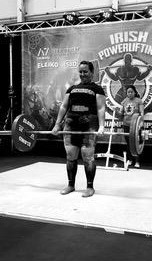 8. Do you think there are any risks for an older novice female lifter? Recovery during
training is a big one, I feel. It take me longer to recover after comps or comp prep. I also feel its harder to cut weight for comps: after I turned 40 this became difficult. Injury is more prominent also, and YES OMG pelvic floor lol! I always joke that at a masters comp all you smell is deep heat and pee!
9. As a strong woman, how do you view your body? When I started lifting I was a 72kg lifter. Over time I gradually gained weight. I’ve mixed feelings about being a bigger lifter. I’m strong at this weight but not happy with my body image. Ideally I would like to be around 80kg but find it hard to motivate myself to lose weight.
 10. What do you have in your sights? I’ve recently had a few injuries which have knocked my training this has made me kinda lose my mojo. I’ve decided to take the rest of the year of to recover and try and lose some weight so I can come back in 2020 with a clear mind. I would still like to compete at Europeans and Worlds, but I’m also contemplating going down the avenue of equipped bench.
11. What’s your number one piece of advice for women who want to start
powerlifting? DO IT! Contact one of the girls in the sport who have been around for a while, have a chat, maybe go and train with them. Come along to as many comps to watch. Don’t over think it. Don’t do that whole “I’m not as strong as the other girls” etc. This is your journey: no one will judge. Id love to help anyone thinking of entering the sport. We all had to start somewhere.
 Clare Conway
Based in Lisburn, Clare is a 41-year-old probation officer. She’s 63kg (most of the time 😋) and a Masters 1 lifter. She’s been a member of NIPF since 2012 when a guy in her gym advised her to make contact with the Fed to put her training to good use and give her a focus for it! She helps out with both the NIPF and the Irish PF, spotting, loading, refereeing (Irish PF) and any other duties!
Clare has been selected for a number of Home Nations comps and for the Commonwealths 2 years in a row (but didn’t compete). She competes in M1 63kg category. Her current personal records are:
Squat: 105 kg
Bench: 65 kg
Deadlift: 145 kg
1. How long have you been powerlifting and how did you get into the sport? I’ve always been sporty, playing hockey, netball and gymnastics at school. When I went back to train as a social worker as a mature student I got into the gym. This started off as taking part in pump, spin and circuit classes. I found that I enjoyed lifting weights and not the cardio side if things! I started lifting in 2012 when I did my first comp (bench only) and then went on to do my first ‘3 lift’* in 2013 and have been hooked since! (In 3-lift competitions you do squat, bench press and deadlift.)
2. Tell me a little bit about your training regime. I’m a single parent so I have to plan my training days around my son. I usually train 3-4 days a week when he is at football training so, therefore, it’s important that I utilise my time efficiently. I have a coach, Sean Ryan Custom Strength, who sends me a weekly programme which is tailored to focusing on the big three (SBD), and then accessory work targeting my weaknesses. I attend group training every Saturday morning with other lifters he coaches. This is a great session which is good craic but also gives Sean the opportunity to see my lifts ‘in real life’. I also send him videos and feedback throughout the week.
My programme is based on RPE scale (rate of perceived exertion) which I found difficult to get used to initially but find beneficial as you pick weights dependent on how you are feeling on the day, taking into consideration amount of food, lack of sleep, stresses etc.
It is hard to balance life, caring for my son, working 9-5, keeping an eye on my nutrition, having a social life and also adequate rest time. But I feel that training is beneficial for my mental health so I try to prioritise it. I like to think that my son looks at his mum and sees someone who is active and invests in their health.
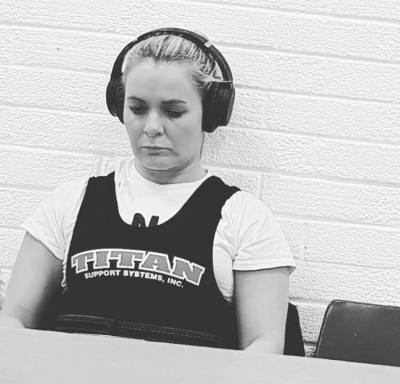 3. What have been the high points, so far, in your powerlifting career? High points are that I have been selected for a number of Home Nations teams over the years, competing in a British championships in Horncastle, and holding a NI record in equipped bench (no longer hold this as of this year). Also being there at the start when female powerlifting began to take off!
4. Have there been any low points in your powerlifting journey so far? A low point has definitely been a serious injury. I had a suspected bulging disc in L5 SI over two years ago. I had complete numbness down the left-hand side of my body and I struggled to walk for weeks. I had to strip everything back and start at the beginning again with kettle bells and extremely light weights. Injury fairly makes you rethink how you train and puts you in your place! Patience is definitely required.
5. What has powerlifting/competing given to you that you didn’t expect? A sense of achievement. Every time I get a PB I feel proud that the hard work, time and effort has paid off. I have also made a lot of very good friends from powerlifting and have had the opportunity to pass my Irish ref powerlifting exam and have had the privilege of reffing at Irish nationals and other comps. I’ve also had the opportunity to become Communications Director for the NIPF, which has allowed me develop and expand our social media to encourage new people to the sport.
6. Can you tell me a little bit about your involvement with NIPF? I am an Irish PF ref and also sit on the committee for NIPD as Comms Director. I also help spot and load most comps and am responsible for arranging and organising other people to help out.
7. Do you think powerlifting is a good sport for women to take up? I think all women should lift to some degree: strong is sexy and it is a great confidence booster when you can lift heavier than you ever thought you could! Also when your body shape changes and you start to see muscles growing! Nothing better!
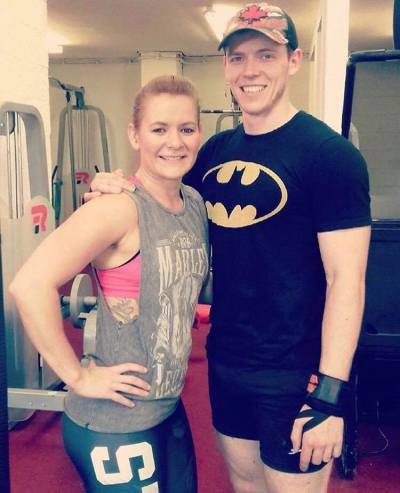 8. What’s the powerlifting community like in N Ireland? It’s such a great supportive community, I’ve been at comps where lifters are shouting and cheering others on even when that person may be taking their record. My coaching group, Custom Strength, is a great environment for getting the work done and also having a laugh. Everyone is very humble and doesn’t take themselves too seriously. You also need a thick skin for all the slagging!
9. Do you think there are any risks for an older novice female lifter? I think there are risks for anyone of any age. It’s about knowing your limits, getting a good coach and working on form above anything else. Leaving the ego at the door is a good idea!
10. As a strong woman, how do you view your body? I love my body now and it took years to get to this point. I feel confident in my own skin and I put a lot of that down to lifting and the powerlifting environment. You can’t beat a strong, confident, sexy woman which a bit of muscle 😍. I do have my worries when going heavy sometimes due to my previous back injury, but I trust my coach and always try and work on my form.
11. What do you have in your sights? Hoping to compete at either British or Irish Masters. I also just focus on what I am lifting and trying to get better. I try not to compare myself to other women or what they are lifting. At the end of the day, if I’m getting better, I’m happy!
12. What’s your number one piece of advice for women who want to start powerlifting? Do it now! I wish I had started earlier! Get a good coach and focus on good form! Don’t worry about who’s looking at you in the gym because I can guarantee you that the men/women you are worried about looking at you are far too self-absorbed to be worrying about what you are doing! Pick up a barbell and get lifting, girls!
13. And what about the food side of things? Pre- comp I keep my protein intake to around 2.2g per kg body weight. I eat a lot of chicken, bagel thins, rice. I try to limit my alcohol intake and stay away from take-aways! However, nutrition isn’t my strong point and always panic about my weight around comps! I always advise rookie lifters to never cut for their first comp and it’s better to lift in a category that you sit comfortably in.
 Una Ferguson
Una is 52 years old (competing in M2 84+ category) and lives near Annacloy. Her current PRs for powerlifting are:
Squat: 105 kg
Bench: 50 kg
Deadlift: 130 kg
1. How long have you been powerlifting? I started powerlifting in September 2018- so 10 months.
2. What inspired you to start powerlifting and what first steps did you take? I started in my current gym as I wanted to achieve a certain body shape. I have been involved in a variety of activities during my life including Irish dancing , classical Greek dancing , Shotokan Karate (1st Dan achieved before rupturing my ACL in skiing), horse riding, general gym classes with PT.
When I started in my current gym my PTs suggested I should take up powerlifting and enter competitions. So although I have experience in a variety of activities and disciplines, powerlifting grabbed my interest early on. I became addicted.
3. Tell me a little bit about your training regime. I train 4 days a week. I train in Conor Gelston’s gym Annacloy. I train with Aaron Kelly 3 days a week and Conor Gelston once weekly.
My PTs have a specific way of training me and preparing me for competition. I train late in the evening usually so I have time with my family. It is escapism from work as it is totally different.
4. What did you enjoy most about the NIPF rookie powerlifting competition in Coleraine this July? Competing in a sport I have grown to love. Having the back-up and support of my PTs and friends from the gym. Making new acquaintances who I will hopefully see at future competitions. Achieving personal records (PRs) and training to break them. I love a challenge.
5. What are your 3 top tips for women just starting their powerlifting journey? Enjoy, listen to your coaches, have faith in the journey they’re taking you on.
It can be tough but the sense of achievement even after a tough session is exhilarating. I get a buzz from achieving. I love the support and encouragement I get from my coaches, other friends at the gym, my family and work colleagues.
6. What has powerlifting given to you that you didn’t expect? That’s a thought-provoking question. I didn’t start out to powerlift so I had no expectation from this at the outset. I am achieving a body shape; it is a work in progress. I have achieved satisfaction and belief in myself that, regardless of age, tough discipline and goals can be achieved. This can be carried forward into life experiences giving a renewed sense of determination to succeed.
7. Why do you think powerlifting is a good sport for women to take up? Powerlifting is one of the most physically challenging sports for anyone. It’s not going to suit everyone but, if embarked upon, I feel it can have a major positive impact on physical and mental well-being. It is inclusive regardless of age, sex, body shape and weight. That is unusual for any sporting activity.
8. What do you have in your sights? Lets see where my training takes me! I have entered for the Ulster Open September 2019 and planning to enter for the British Masters in Lincoln October 2019.
Right then! I’m just going outside and may be some time. (By the way, if you’re new to my blog, you can find more out about my #OldDogNewTricks project here.)
JT 🙂

 Yesterday was the big day: the
  Bench
Bench It was a really well organised event and the support from the spectators, officials and other lifters was absolutely brilliant. It was also the friendliest and most inclusive sporting event I’ve ever taken part in. Even though I was the oldest competitor yesterday, I didn’t feel out of place at all. It was lovely to see so many women taking part, and it was lovely to share the nervous excitement at the side of the lifting platform with them.
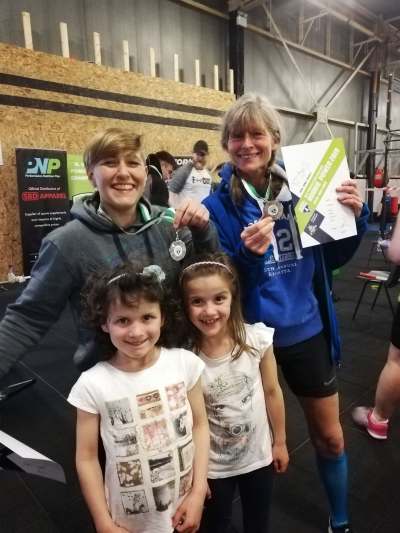 Before I sign off, I’d just like to thank the organisers, officials, other competitors and spectators (including my friends from CrossFit Causeway who came along to support) for making yesterday such a fabulous event. Huge shout out also to Paul Cullen (my lifting coach), to Gail Mahon (my powerlifting training buddy who won a silver medal in the 57kg category), and to all my fellow athletes at CrossFit Causeway who have been so encouraging and supportive.
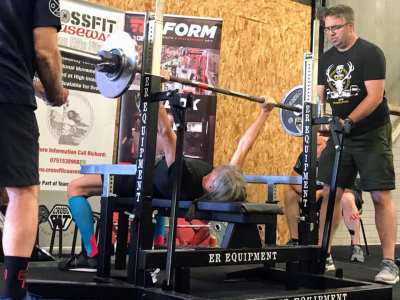
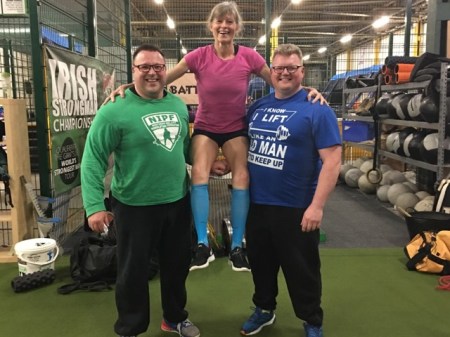
 I’ve just come off the platform, having bench-pressed 47.5kg. In the grand scheme of things that’s not a big lift, but I had to give it my absolute all to get the lift, which was also a personal record. I’m being met off the platform by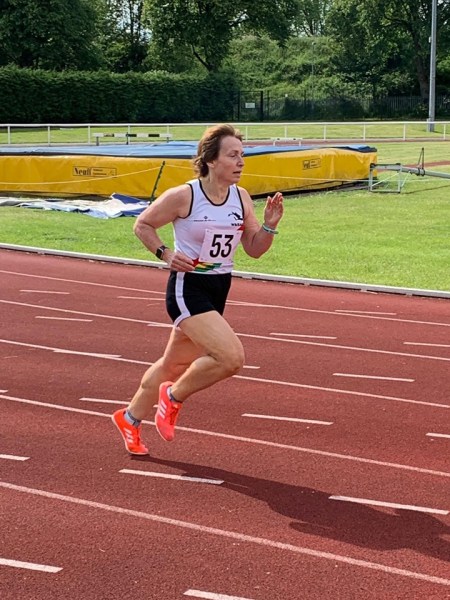

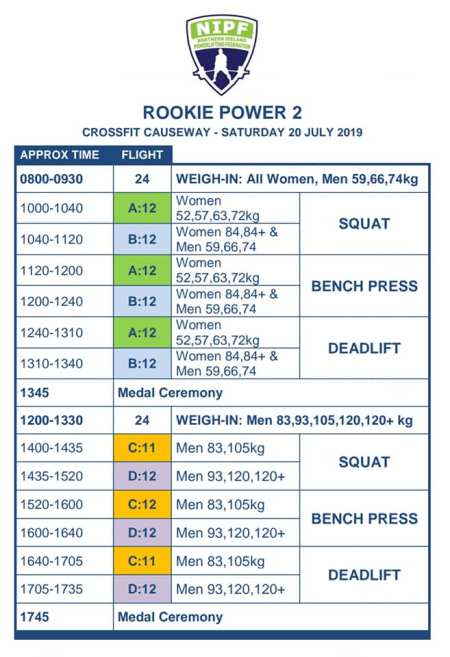 I made it! After almost 7 months of training, I’m ready for the powerlifting competition on Saturday 20 July. Last week I completed my final week of heavy lifting and this week is all about the de-load 🙂 . I’m looking forward to a lighter training schedule, good food and lots of sleep.
 In the last couple of weeks I’ve managed to set a personal record in each of the 3 lifts:
 When I entered the powerlifting competition back in January, I weighed 57.1kg (bringing me – just – into the W63 M2 category). My sprinting adventure drove my weight down into the low 55s to start with, but now I’m fluctuating between 56.5kg and 57.5kg. I have until Wednesday morning to confirm my final weight category (W57 or W63) – and that’s the only thing I need to take care of right now. My kit is ‘broken in’ and ready to go. The training is done (I didn’t miss a single session, although I did get an extra de-load week to support my 400m/800m adventure). My head is in the right place. As we say in Ballymoney (all the time🤣 ): Thunderbirds are go. And the bonus for me is that I’m the oldest lifter in the competition! I think that’s pretty cool 😎.

 Progress on the bench press has slowed down (with my as-long-as-legs arms, this lift was always going to be a bit of a challenge!), but my deadlift and bench press have been solid in their upward trend. However (and it’s a really big however that I’m not going to ignore), my pelvic floor seems to have reached its threshold. The menopause (along with a host of other life events – like having children) can lead to a weakening of the pelvic floor muscles. I’d say that mine are (or rather were) in good shape (although when skipping comes up on the CrossFit programme, I always hope for less than 100 skips … after that, well, you know 🤣). I do my pelvic floor exercises regularly, I’m not overweight and I’m physically active – but powerlifting is a whole different order of stress and my body is making it quite clear that going much further will only end in tears. Well, tears are obviously a very polite metaphor 😎.
 Taking the positives from my powerlifting adventure: I’m much stronger than I was and I’d put money on my bones being super dense. It’s taught me to challenge what I believe is possible for my ectomorphic body (which, actually, doesn’t really look that ectomorphic any more!) and supported a new level of body confidence. I’ll still be competing on 20 July, but I may not be lifting to my full potential – or even the weights that I’ve been lifting recently. For back squats and deadlifts, I’ve gone back 3 weeks in the schedule to the point at which I didn’t have a problem. I hope this helps me to rebuild a bit of confidence in my pelvic flooor, gives my pelvic floor a bit of time to recover and helps me to feel competition-ready. And there’s always the demon bench press to hurl myself at – even if I just make it to 47kg, that will be something to celebrate!
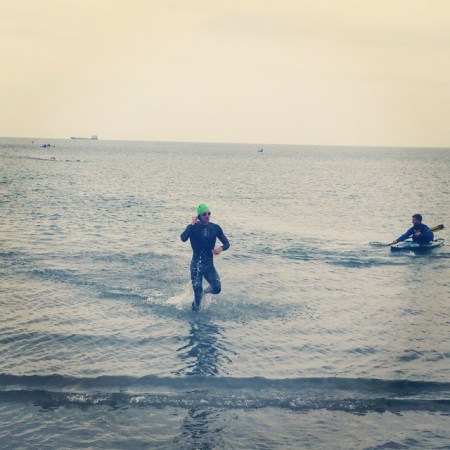
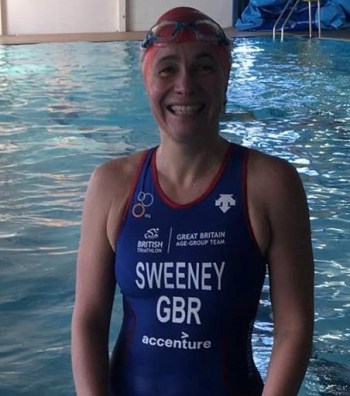
 First up in this series is Kerry Sweeney. Kerry’s a 44-year-old mum of three, wife, paramedic team leader for the Scottish Ambulance Service, RAF reservist medic, runner, swimmer and outdoor-lover. She recently represented Great Britain at the ITU (International Triathlon Union) World Championships,
  1. You’ve just represented GB for the first time at the ITU championships. Can you tell us a bit about your journey to competing? I had a random chat with an existing GB age group athlete that I know through social media who suggested I should look at qualifying times. I had one opportunity left in the season in Scotland to qualify and I decided that I should go for it. I raced at the Stirling aquathlon, placing 3rd overall and 1st in my age group. After that I received an email that confirmed my place. Knowing that I would be representing GB is a feeling that it is difficult to describe: it was the biggest sporting achievement of my life. Some of my motivators were inner motivations to prove to myself that you really can do anything you want to do if you work hard enough. From an external point of view I wanted to show my children that you should chase your dreams.
 2. You had a phenomenal championship! What was the race like and what impact has this achievement had on you? Throughout the race, due to how the set up was, I never knew what place I was in! The first I knew was when friends from home were messaging me. I knew I had run a 5K PB and that felt like confirmation that I had given it my all. My swim was quite difficult and I had to dig deep into mental reserves to keep pushing and this consolidated the whole feeling of being strong both mentally and physically. I sat on the roadside by myself immediately after the race with medal in my hand and I felt so overwhelmed with happiness that I had just lived my dream. All those tired, cold, hard runs were worth it. The sacrifices of going home early and monitoring weight, food, alcohol and training they were forgotten. I also realised that it’s okay not to win as long as you give it your best shot.
 4. What advice would you give to women in their 40s, 50s and beyond who might really want to do something but are afraid it’s too late / they may make a fool of themselves / they’re really not cut out for whatever it is they want to do? My advice would always be give it a go. I personally don’t care if I make a fool of myself as it’s better than suffocating your dreams and I believe we are all capable of so much more than we think we are. If you don’t try, you will never know. I met some amazing American aquathletes who were in their 60s. With the uptake in women in sport I believe there is a place for everyone whether it be recreational, national or international.
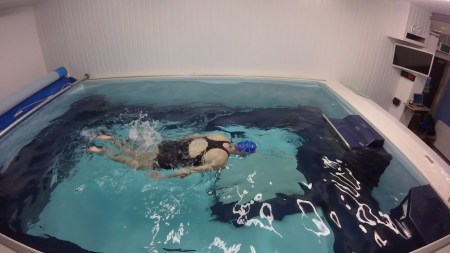
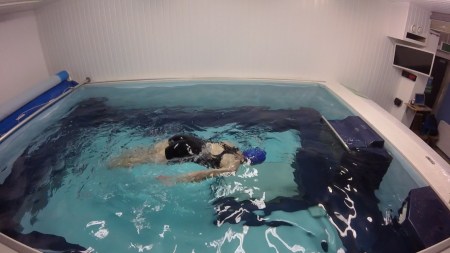
 5. Do you have any swimming advice for me and my upcoming butterfly adventure? Break it down and drill, drill, drill, then put it back together. For butterfly, relax and keep it smooth.
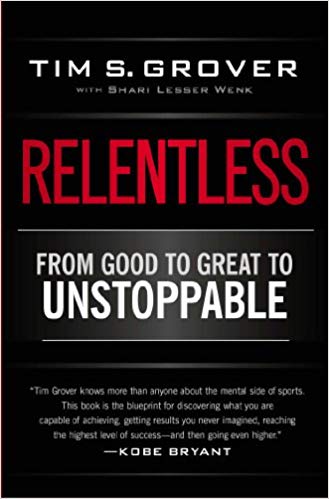 I read this book during the run-up to the
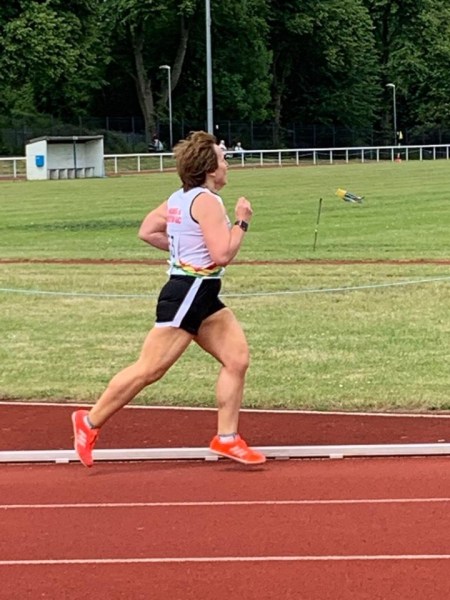
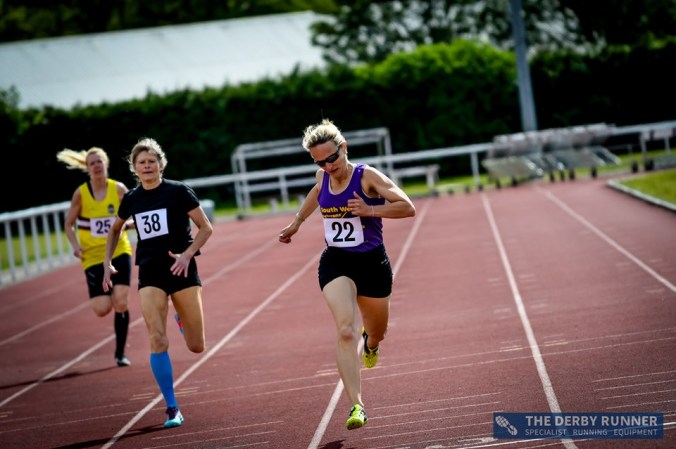
  Well, that’s me back safe and sound from my first sortie into the world of track and field! I talk in today’s video-blog (scroll right down) about how I got on at the 400m and 800m races at the Midland Masters Track & Field Championships, which took place in Nuneaton, Warwickshire on 9 June.
 Humans Resourced