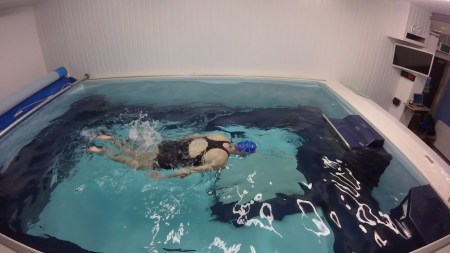
Having a go at the first of the fly drills! It’s all about the undulating 🙂
Well, I’m certainly not one to let the grass grow under my feet! My fourth #OldDogNewTricks adventure is already well under way 🙂 : learning to swim butterfly.
On Wednesday 24 July I went to Belfast to meet David Graham of Trinetic. My first session was all about establishing where I’m at right now with the front crawl (the initial programming is very much crawl-based); making recommendations about how I can improve this particular stroke; and then learning some fly drills to support my butterfly adventure.

This goes for any kind of flying 🤣
Just to be clear: when I arrived at Trinetic I knew I did not have the requisite skills to swim any butterfly at all! To be honest, I thought this might be the adventure where I completely failed (although I knew I’d have fun trying to succeed 🤣). If you remember, I’d had a bit of a traumatic experience with this stroke as a child (there was a last place, a considerable amount of flailing about, and quite a bit of slow-clapping involved 😱) and I wasn’t quite sure why this adventure impulse had presented itself.
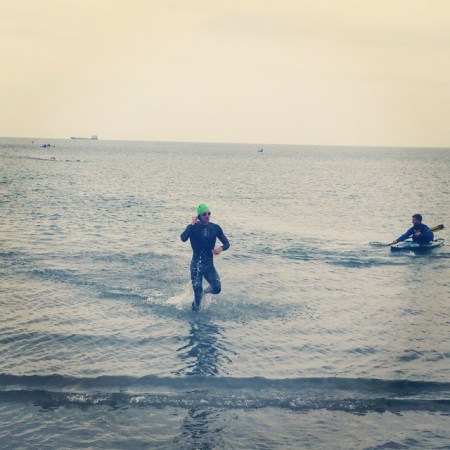
David Graham in action!
The session took place in David’s infinity pool. Swimming in this pool was an adventure in its own right! You basically swim in a tiny pool against a current – and the speed of that current can be varied. David took video footage of my front crawl and also of the butterfly drills he taught me, showing how I’d progressed even within the space of an hour!
David’s an excellent coach, full of good humour and brilliant at keeping things as simple as they need to be. He reckons that it’ll take about 3 months for me to be able to swim 25m of butterfly in a competent fashion. Even him saying that filled me with confidence – and even though I had arrived thinking I was likely to fail, before the session was over I was pretty certain that the 25m goal was doable!
After the session David sent me a progressive training programme to follow. Part of the programme is all about increasing the efficiency of my crawl and building up to swimming length-after-length of this stroke (at the moment, I swim alternate front crawl and breast stroke). The programme also includes 4 butterfly drills (no arms at this stage!). I’ve committed to going to the pool 3 mornings a week and in 3 weeks I’ll go back to David to see what progress I’ve made.
You can see how much work my front crawl needs here:
This is my favourite of the four butterfly drills. I love the movement!
This is the drill I find the physically toughest:
I went to my local pool on Friday morning and did my first structured session … and I completely loved it 😍. Normally I swim 1600m (I’ve been doing this twice a week since 31 December 2018) and sometimes it can get a bit boring – I feel like I just want to get the session over and done with (and get my breakfast because I’m absolutely starving!). On Friday I swam 1200m, 900m of which was front crawl. That’s the most front crawl I’ve ever done in one session in my life 😎. And you know what? I really enjoyed it. I kept my mind on the job, making sure I was kicking from the hips (before there was a whole lot of knee action going on), making sure my hands were entering the water in the right way, and making sure my rolling was symmetrical. I didn’t get bored once, I wasn’t as tired as I normally would be and I actually started to overtake other swimmers!
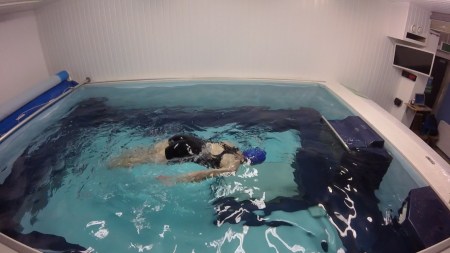
I’m completely going for it!
The butterfly drills were pretty tough but doable. In fact, they were my favourite part, and I had a lot of fun overtaking some breast-strokers while I was doing them! By the fourth drill I was quite tired and this tiredness caused a bit of ‘pool drift’. I’ll have to keep that in check, otherwise I’ll get myself a bit of a reputation 🤣.
So now I’m thinking about concrete goals and ways of keeping myself motivated. It’d be great if there was some kind of award that I could do for 25m fly. Swim England offers two awards, both at bronze level (here and here), which would require me to complete the distance in either 25.6 seconds or 23.20 seconds respectively. Given that Caeleb Dressel has just broken Michael Phelps’ 100m world fly record (completing the distance at an astonishing 49.50), a time of 23-25 seconds for 25m still seems rather fast! Anyway, I’m going to dig around a bit more to see if there are similar kinds of awards in Ireland. (I’m also thinking about racing someone. More on that in the future!)
Right then. It’s been a big week so I’m just going outside and may be some time 🙂 . (By the way, if you’re new to my blog, you can find more out about my #OldDogNewTricks project here.)
JT 🙂
 Yesterday was the big day: the
  Bench
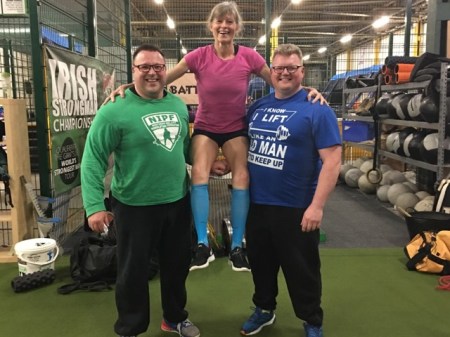
Bench It was a really well organised event and the support from the spectators, officials and other lifters was absolutely brilliant. It was also the friendliest and most inclusive sporting event I’ve ever taken part in. Even though I was the oldest competitor yesterday, I didn’t feel out of place at all. It was lovely to see so many women taking part, and it was lovely to share the nervous excitement at the side of the lifting platform with them.
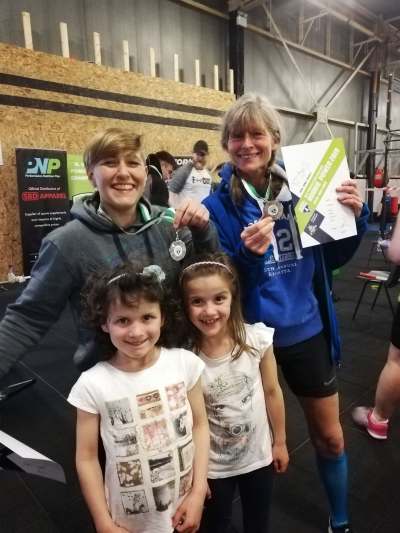 Before I sign off, I’d just like to thank the organisers, officials, other competitors and spectators (including my friends from CrossFit Causeway who came along to support) for making yesterday such a fabulous event. Huge shout out also to Paul Cullen (my lifting coach), to Gail Mahon (my powerlifting training buddy who won a silver medal in the 57kg category), and to all my fellow athletes at CrossFit Causeway who have been so encouraging and supportive.
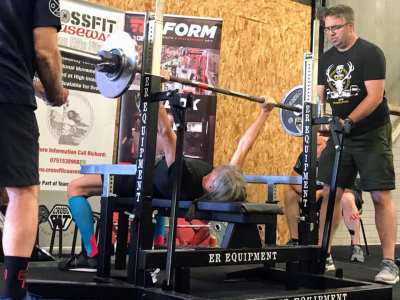
 I’ve just come off the platform, having bench-pressed 47.5kg. In the grand scheme of things that’s not a big lift, but I had to give it my absolute all to get the lift, which was also a personal record. I’m being met off the platform by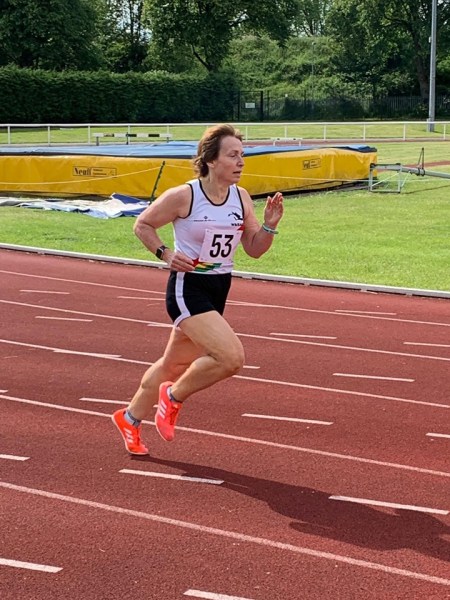

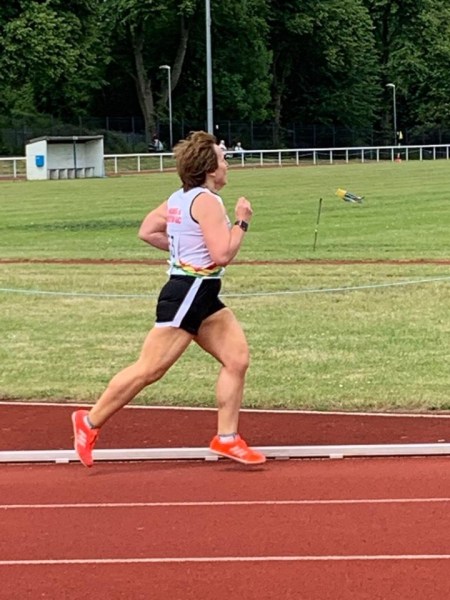
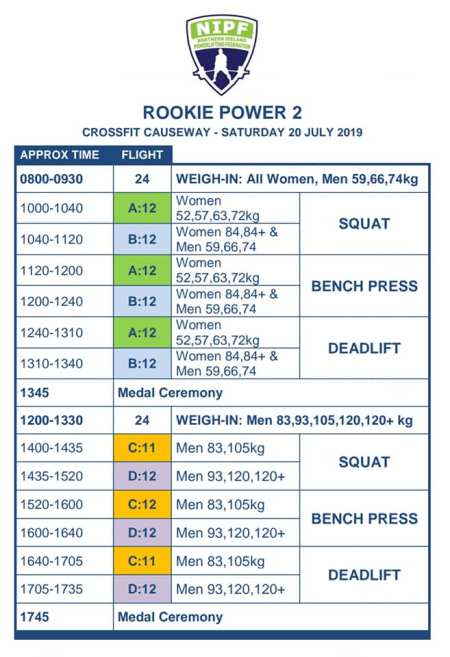 I made it! After almost 7 months of training, I’m ready for the powerlifting competition on Saturday 20 July. Last week I completed my final week of heavy lifting and this week is all about the de-load 🙂 . I’m looking forward to a lighter training schedule, good food and lots of sleep.
 In the last couple of weeks I’ve managed to set a personal record in each of the 3 lifts:
 When I entered the powerlifting competition back in January, I weighed 57.1kg (bringing me – just – into the W63 M2 category). My sprinting adventure drove my weight down into the low 55s to start with, but now I’m fluctuating between 56.5kg and 57.5kg. I have until Wednesday morning to confirm my final weight category (W57 or W63) – and that’s the only thing I need to take care of right now. My kit is ‘broken in’ and ready to go. The training is done (I didn’t miss a single session, although I did get an extra de-load week to support my 400m/800m adventure). My head is in the right place. As we say in Ballymoney (all the time🤣 ): Thunderbirds are go. And the bonus for me is that I’m the oldest lifter in the competition! I think that’s pretty cool 😎.

 Progress on the bench press has slowed down (with my as-long-as-legs arms, this lift was always going to be a bit of a challenge!), but my deadlift and bench press have been solid in their upward trend. However (and it’s a really big however that I’m not going to ignore), my pelvic floor seems to have reached its threshold. The menopause (along with a host of other life events – like having children) can lead to a weakening of the pelvic floor muscles. I’d say that mine are (or rather were) in good shape (although when skipping comes up on the CrossFit programme, I always hope for less than 100 skips … after that, well, you know 🤣). I do my pelvic floor exercises regularly, I’m not overweight and I’m physically active – but powerlifting is a whole different order of stress and my body is making it quite clear that going much further will only end in tears. Well, tears are obviously a very polite metaphor 😎.
 Taking the positives from my powerlifting adventure: I’m much stronger than I was and I’d put money on my bones being super dense. It’s taught me to challenge what I believe is possible for my ectomorphic body (which, actually, doesn’t really look that ectomorphic any more!) and supported a new level of body confidence. I’ll still be competing on 20 July, but I may not be lifting to my full potential – or even the weights that I’ve been lifting recently. For back squats and deadlifts, I’ve gone back 3 weeks in the schedule to the point at which I didn’t have a problem. I hope this helps me to rebuild a bit of confidence in my pelvic flooor, gives my pelvic floor a bit of time to recover and helps me to feel competition-ready. And there’s always the demon bench press to hurl myself at – even if I just make it to 47kg, that will be something to celebrate!
 First up in this series is Kerry Sweeney. Kerry’s a 44-year-old mum of three, wife, paramedic team leader for the Scottish Ambulance Service, RAF reservist medic, runner, swimmer and outdoor-lover. She recently represented Great Britain at the ITU (International Triathlon Union) World Championships,
  1. You’ve just represented GB for the first time at the ITU championships. Can you tell us a bit about your journey to competing? I had a random chat with an existing GB age group athlete that I know through social media who suggested I should look at qualifying times. I had one opportunity left in the season in Scotland to qualify and I decided that I should go for it. I raced at the Stirling aquathlon, placing 3rd overall and 1st in my age group. After that I received an email that confirmed my place. Knowing that I would be representing GB is a feeling that it is difficult to describe: it was the biggest sporting achievement of my life. Some of my motivators were inner motivations to prove to myself that you really can do anything you want to do if you work hard enough. From an external point of view I wanted to show my children that you should chase your dreams.
 2. You had a phenomenal championship! What was the race like and what impact has this achievement had on you? Throughout the race, due to how the set up was, I never knew what place I was in! The first I knew was when friends from home were messaging me. I knew I had run a 5K PB and that felt like confirmation that I had given it my all. My swim was quite difficult and I had to dig deep into mental reserves to keep pushing and this consolidated the whole feeling of being strong both mentally and physically. I sat on the roadside by myself immediately after the race with medal in my hand and I felt so overwhelmed with happiness that I had just lived my dream. All those tired, cold, hard runs were worth it. The sacrifices of going home early and monitoring weight, food, alcohol and training they were forgotten. I also realised that it’s okay not to win as long as you give it your best shot.
 4. What advice would you give to women in their 40s, 50s and beyond who might really want to do something but are afraid it’s too late / they may make a fool of themselves / they’re really not cut out for whatever it is they want to do? My advice would always be give it a go. I personally don’t care if I make a fool of myself as it’s better than suffocating your dreams and I believe we are all capable of so much more than we think we are. If you don’t try, you will never know. I met some amazing American aquathletes who were in their 60s. With the uptake in women in sport I believe there is a place for everyone whether it be recreational, national or international.
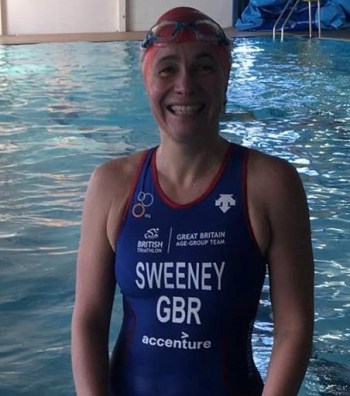 5. Do you have any swimming advice for me and my upcoming butterfly adventure? Break it down and drill, drill, drill, then put it back together. For butterfly, relax and keep it smooth.
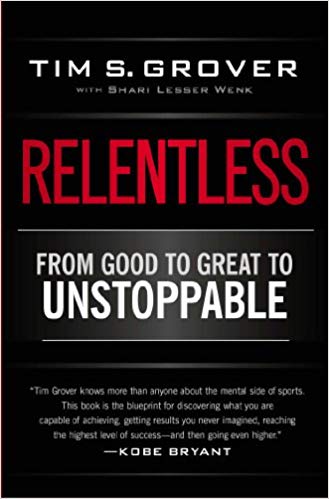 I read this book during the run-up to the
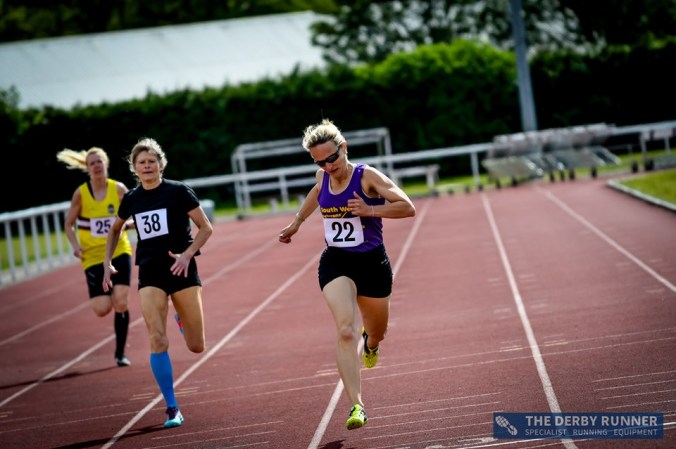
  Well, that’s me back safe and sound from my first sortie into the world of track and field! I talk in today’s video-blog (scroll right down) about how I got on at the 400m and 800m races at the Midland Masters Track & Field Championships, which took place in Nuneaton, Warwickshire on 9 June.
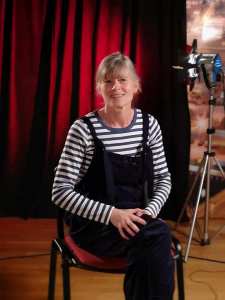 A while back, I got the chance to talk to Karen Mooney at Northern Visions Television about my #OldDogNewTricks project. As well as talking about my adventures, we also talk about
  Humans Resourced