I enjoyed my first sign language adventure so much that I’m giving it another go! Today I’m trying my hand at signing the alphabet in British Sign Language. This was alot of fun 🙂
Have you ever asked yourself what you might be able to do in the time it takes to boil a kettle? If you’re anything like me, the answer to that question is probably a resounding “no”.
Today I’m trying my first kettle adventure (and a boiling kettle certainly adds pressure to the experience, I can tell you!)
Today’s challenge is to do with words . I’ve posted the results , along with actual kettle-boiling time, below the video.
Kettle-boiling time : 1 minute 25 seconds
Liquid : 0.5 litre room-temperature water
Number of words (excluding repeats) : 26
Performance hindered by : all the swear words I knew beginning with the letter “B” that I wouldn’t let myself say! Blocking any word blocked the overall flow of words.
Big lesson : conscious self-regulation can impede performance!
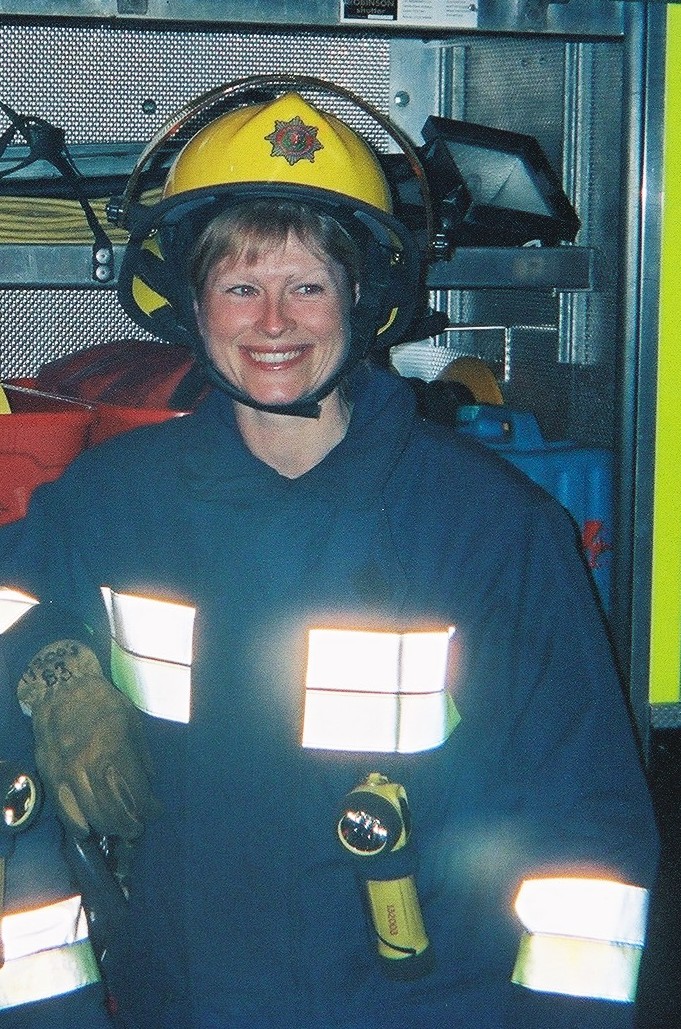
One thing that you may not know about me is that I used to be a retained fire fighter in a small town in Scotland.
At this point, I should maybe explain that I wasn’t the world’s greatest fire fighter due to my gift for being totally impractical.
Fast forward to 11th January 2014 and I find myself walking into an adventure requiring some practical talent! (Oh dear).
Today I am trying my hand at working a Kubota KX161-3 ~ a 5-ton class digger (there is a picture of the digger in its full glory below the video).
This is what I managed after a 2-minute training session :
Here she is in all her glory. The first part of the arm from the cab is called the boom. The second part of the arm is called the dipper. The final part is called the bucket.
You’ll notice that I didn’t talk very much during the video : I had to concentrate quite hard!
Have you ever watched a cooking programme where the chef says something along the lines of “and here’s something you can rustle up from your own store cupboard” ?
Then they open their store cupboard and it just happens to be sufficiently equipped to build a self-fuelling fighter jet from scratch and feed its pilot for 3 months. And then you think “yeah, right”.
Inspired by the Store Cupboard Theory, today’s adventure sought to answer the question “what, if anything, can I rustle up from my own store cupboard?” I was pleasantly surprised to find that I had all the ingredients to make my own flouride-free toothpaste!
So, here’s me demonstrating how to make it 🙂 (I’ve posted a photo below the video too which may impress you completely.)
As you can see , the mixture did ripen into perfect toothpaste consistency eventually! Whilst the maturing process has in no way improved its flavour, I may make some more on the basis that it seems to numb your taste buds for hours (which may come in handy should I be force-fed Brussels sprouts 😛 ). I am also thinking “fighter jet fuel”.
For Christmas I received a fabulous gift : The Horologicon by Mark Forsyth. The Horologicon is a quirky, entertaining and witty book about extraordinary, obscure and obsolete words.
I’m using the book as a basis for today’s adventure (and there is plenty of scope for future adventures too!). Today I am going to resurrect “fudgel”, an eighteenth century word which deserves a twenty-first century revival.
By the way, if you haven’t learned to fudgel yet, you really ought to. In today’s video, I show you how it’s done. It turns out that I’ve got quite a talent for it.
I have to admit that I got into a bit of a panic today due to a fair degree of misplaced confidence regarding my chances of long-term survival (see previous brassica-related adventures 🙂 ) . The awful realisation dawned on me that my communication arsenal was lacking the one tool that could save me in the toughest of conditions : morse code!
Thanks to Wikepedia, I have learned that, compared to voice-based communication, morse code is less sensitive to poor signal conditions. In other words, I’ll be able to get my message across loud and clear. I feel so upbeat about my increased chances of survival that I’m already humming that Gloria Gaynor classic 🙂
As part of my research, I learned that morse code was last used as an international standard for maritime distress in 1999. The French Navy stopped using morse code on the 31st January 1997. I found their final message very powerful : “Calling all. This is our last cry before eternal silence.”
If I ever get defeated by the sinister sprout, I’ll have the French Navy’s message transmitted in morse code at my post-life celebration.
Here goes …. (Just to let you know, I’m speaking in the dark for the first 20 seconds. The transmission starts at around the 20 second mark. Unfortunately, the light doesn’t appear to be that bright on the video but I think you’ll get the message 🙂 )
Should you also be interested in longevity , you can learn how to communicate in morse code here!
Today, I bought my very first copy of the Angler’s Mail (they don’t call me Intrepid Jane for nothing). I was curious to find out if I could learn three fascinating things about angling by reading this magazine.
Here’s what I discovered (hold on to your hats, by the way. This is pretty mind-blowing stuff. No. Really. It is.) ~
And just to cover all bases … to be totally sure … absolutely certain … completely safe …. assured of survival … Adventure 5 sees my trying my hand (quite literally 🙂 ) at British Sign Language!
Adventure seems to be ubiquitous at the moment. This week alone, I’ve watched television programmes about Reinhold Messner (he climbed Everest without oxygen) ; about James Cracknell and Ben Fogle (they attempted to ride camels across the Empty Quarter of the Arabian Desert) ; and about Bear Grylls and Stephen Fry (they shared a wild weekend in the Dolomites).
Whilst I recognise the practical skills and courage required for such undertakings, I did have concerns for their safety. I wondered whether they had sufficient linguistic skills to communicate with the local people should it come to a life-or-death situation.
I think responsible adventurers should take it upon themselves to learn at least one “survival phrase” in the local language of the countries in which they mount expeditions. From my research, there seems to be one key phrase that will ensure survival pretty much anywhere.
The adventure I have set myself today is to say that key survival phrase in 11 languages. Can I do it?
I hope this short video will be accepted as a vital contribution to the global adventuring community. Words save lives 🙂


 Humans Resourced